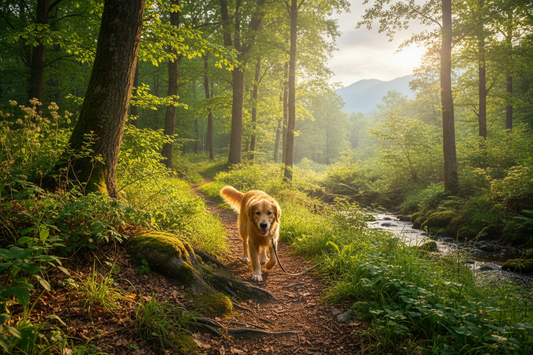
Summer Walks Should Feel Fun — Not Risky
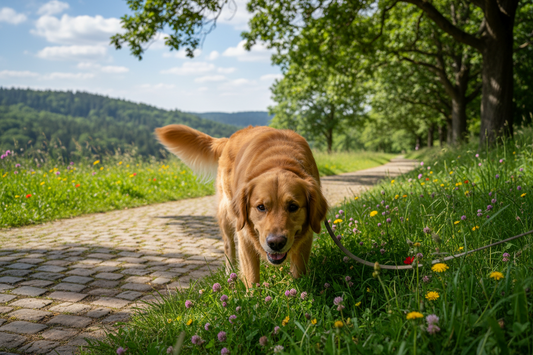
When temperatures climb, the biggest risks for dogs are dehydration, overheated paws, and pushing too far too fast.
Use this simple checklist to keep summer walks safe and enjoyable for the whole family.
The Summer Walk Checklist
-
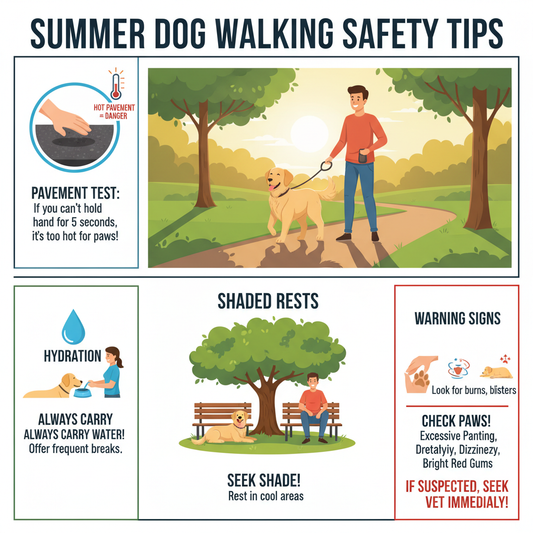
Do the hand test on pavement
If you can’t hold your hand on the ground for 7 seconds, it’s too hot for paws. -
Choose the right time
Early mornings or later evenings are much safer than midday heat. -
Bring water every time
Even for “quick” walks. -
Plan shade breaks
Short rest stops help prevent overheating. -
Watch for warning signs
Excessive panting, slowing down, drooling, seeking shade, or refusing to move. -
Keep walks shorter than you think
You can always go for a second mini-walk later. -
Cool down once you’re home
Offer water, allow rest, and keep the environment calm.
Clean Rewards for Calm Leash Manners
Use treats to reward:
-
Checking in with you
-
Passing other dogs calmly
-
Waiting patiently at crosswalks
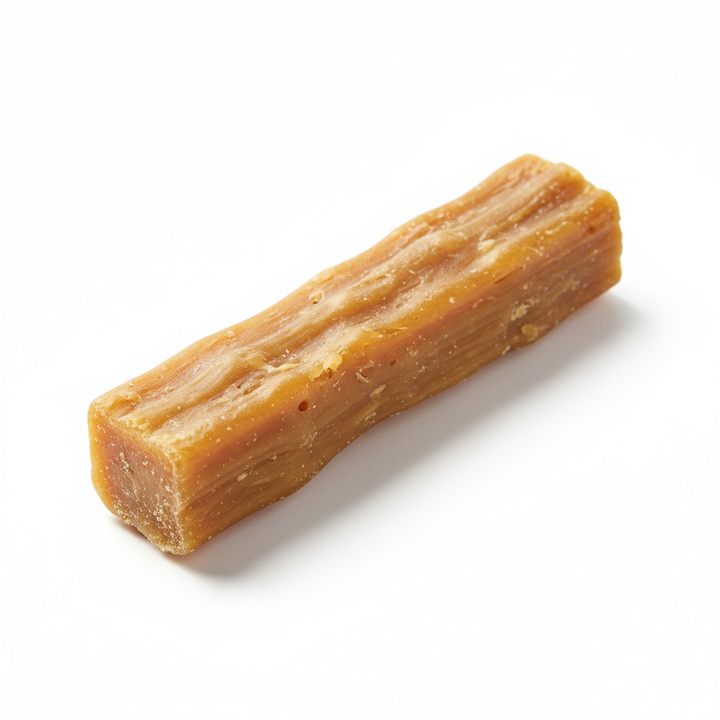
Shop: Dog Treats
(Insert your Dog Treats collection link)
Gear Tip
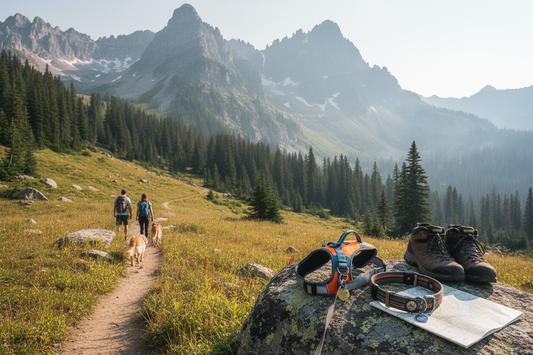
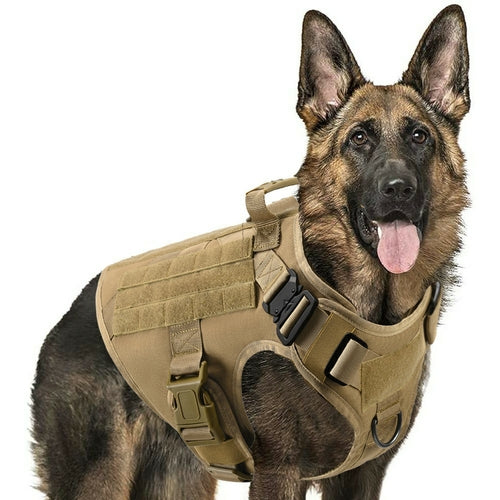
Summer safety is easier with the right walking basics—comfortable gear, secure ID, and equipment that reduces pulling and stress.
Browse: Dog Harness, Collar & Tags
(Insert your harness/collar/tags collection link)
Quick Reminder
Ready for safer summer walks?
Keep it simple: hydrate, protect paws, and use gear that fits properly.
2. Rainy-Day Dog Walks: A Simple Checklist for Mud, Safety, and a Clean Return Home
Rainy Walks Can Be Great — If You Plan the “After”
Wet weather isn’t the problem. The real challenge is slippery surfaces, cold temperatures, and the muddy cleanup when you get home.
With a little preparation, rainy walks can still be easy and enjoyable.
The Rainy-Day Walk Checklist
-
Shorter route, same routine
Maintain the habit without overdoing the walk. -
Prioritize traction over speed
Wet leaves and pavement can be very slippery. -
Improve visibility
Reflective gear or lights help in gray weather. -
Prepare a towel near the door
Keep one in the car or entryway for quick cleanup. -
Dry paws and belly first
This prevents irritation and the classic “wet dog” smell. -
Reward calm behavior at the doorway
Most chaos happens during the return home.
Clean Rewards for Doorway Calm
Reward moments that matter:
-
Sitting while you wipe paws
-
Waiting calmly at the door
-
Allowing leash removal without excitement
Shop: Dog Treats
(Insert your Dog Treats collection link)
Adventure Gear Tip
Rainy walks are exactly why quality walking gear matters—secure fit, better control, and fewer messy surprises.
Browse: Pet Adventure Gear
(Insert your Pet Adventure Gear collection link)
Quick Reminder
Want rainy walks that don’t feel like a chore?
Create a simple entryway routine and reward calm behavior.
3. The “Better Park Trip” Checklist
A Family Plan for Calm Greetings, Recall, and Safer Play
Park Time Should Feel Like Connection — Not Chaos
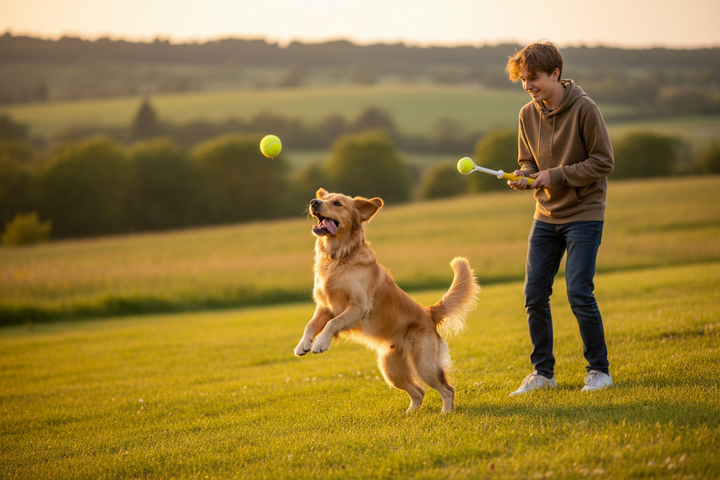
The best park trips aren’t the longest ones.
They’re the ones with a simple plan: calm greetings, quick check-ins, and a dog that can disengage when needed.
The Park Trip Checklist
-
Start with two minutes of calm
Let your dog sniff and settle before play begins. -
Practice name response early
Say their name and reward eye contact. -
Do a quick recall drill
Practice a few 10-second recalls before distractions build. -
Observe play style carefully
Look for loose bodies, bouncy movement, and natural breaks. -
Take micro-breaks
Call your dog back, reward, then release them to play again. -
Leave while things are still positive
Don’t wait until your dog becomes overtired.
Clean Rewards for Recall and Polite Greetings
Use treats for:
-
Coming when called
-
Passing other dogs calmly
-
Choosing you over distractions
Shop: Dog Treats
(Insert your Dog Treats collection link)
Gear Tip: Control Without Conflict
A well-fitted harness and secure ID aren’t optional—they’re essential for busy parks and family outings.
Shop: Dog Harness, Collar & Tags
(Insert your harness/collar/tags collection link)
Quick Reminder
Want calmer park trips?
Keep it simple: short drills, frequent rewards, and planned breaks.