Hamsters may be small, but their care needs are bigger than many people expect. One of the most common misconceptions about hamster care is that a wheel and a cage are enough. In reality, hamsters need a more enriching environment to stay active, curious, and healthy.
If you want your hamster to thrive, it helps to think beyond the basics and create a setup that supports natural behaviors like burrowing, foraging, hiding, and exploring.
Why basic setups often fall short
Many traditional hamster enclosures are designed for convenience, not for the animal's long-term well-being. Small cages, limited floor space, and minimal enrichment can leave hamsters with few healthy outlets for their energy.
Hamsters are naturally active animals. In the wild, they spend time digging tunnels, searching for food, and moving through varied environments. When those instincts are not supported in captivity, stress and boredom can show up in different ways.
Signs a hamster may need more enrichment
A hamster that lacks stimulation may show behaviors such as:
- Repeated bar chewing
- Pacing or frantic movement
- Excessive climbing in unsafe ways
- Digging at corners constantly
- Restlessness during active hours
These signs do not always point to one issue, but they often suggest that the habitat needs improvement.
What a well-enriched hamster habitat should include
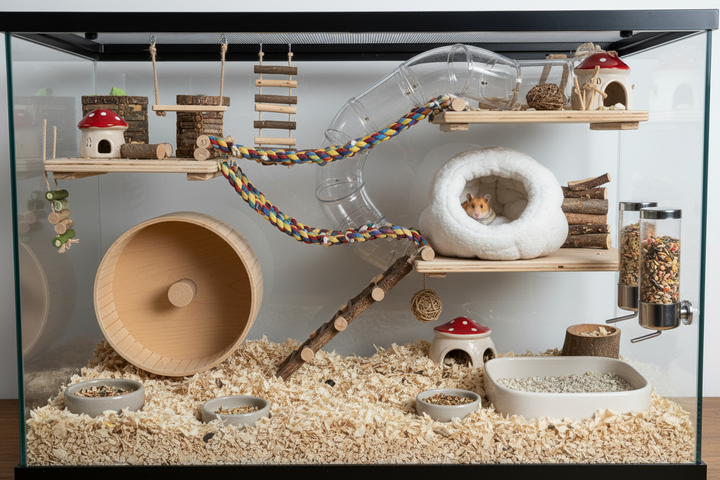
A healthy hamster setup usually includes more than food, water, and a wheel. The goal is to create a space that allows natural movement and species-appropriate behavior.
Helpful habitat features include:
- Deep bedding for burrowing
- A properly sized exercise wheel
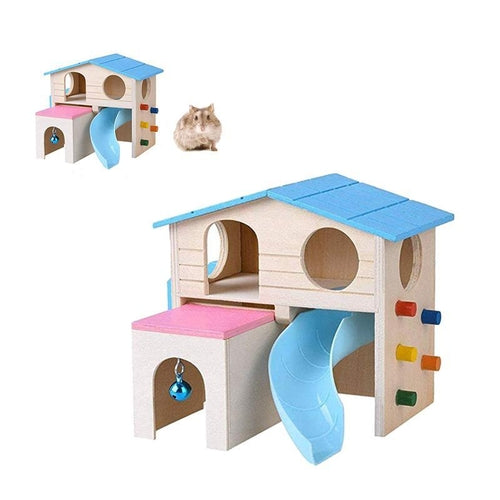
- Multiple hides or shelters
- Tunnels and climbing-safe structures
- Chew items for dental wear
- Foraging opportunities
- A sand bath, if appropriate for the species
Floor space matters too. A larger enclosure gives hamsters more room to explore and helps reduce stress-related behaviors.
The importance of burrowing and hiding
Hamsters are prey animals, which means they naturally seek shelter and security. Deep bedding and enclosed hideouts help them feel safer and more comfortable.
Burrowing is not just a fun activity. It is part of how hamsters regulate stress, rest, and interact with their environment. When given enough bedding depth and a stable setup, many hamsters will create their own tunnels and sleeping areas.
Foraging keeps hamsters mentally engaged
Scatter feeding, treat hiding, and safe enrichment toys can help turn mealtime into an activity instead of a routine bowl refill. This encourages natural foraging behavior and gives hamsters more to do during their active periods.
Simple changes like hiding food in bedding or offering safe textures to explore can make a habitat feel much more stimulating.
Support better hamster care with thoughtful products
Hamster care should be built around what these animals actually need, not just what fits on a shelf. Spacious habitats, safe bedding, chew items, hides, and enrichment tools all work together to support a healthier life.
At Walnut Creek Pets, we believe small pets deserve thoughtful, species-appropriate care. When you build a habitat that supports natural behavior, you are not just making your hamster busier. You are helping them feel safer, healthier, and more at home.
Final thoughts
A wheel is important, but it should never be the whole plan. Hamsters need space, enrichment, and opportunities to burrow, forage, and hide if they are going to truly thrive.
When you look beyond the basics, you can create a setup that supports both physical health and emotional well-being for one very active little pet.