Axolotl Water Quality: Temperature, Parameters, and Why Chilling Matters

Water Quality Is Axolotl Health
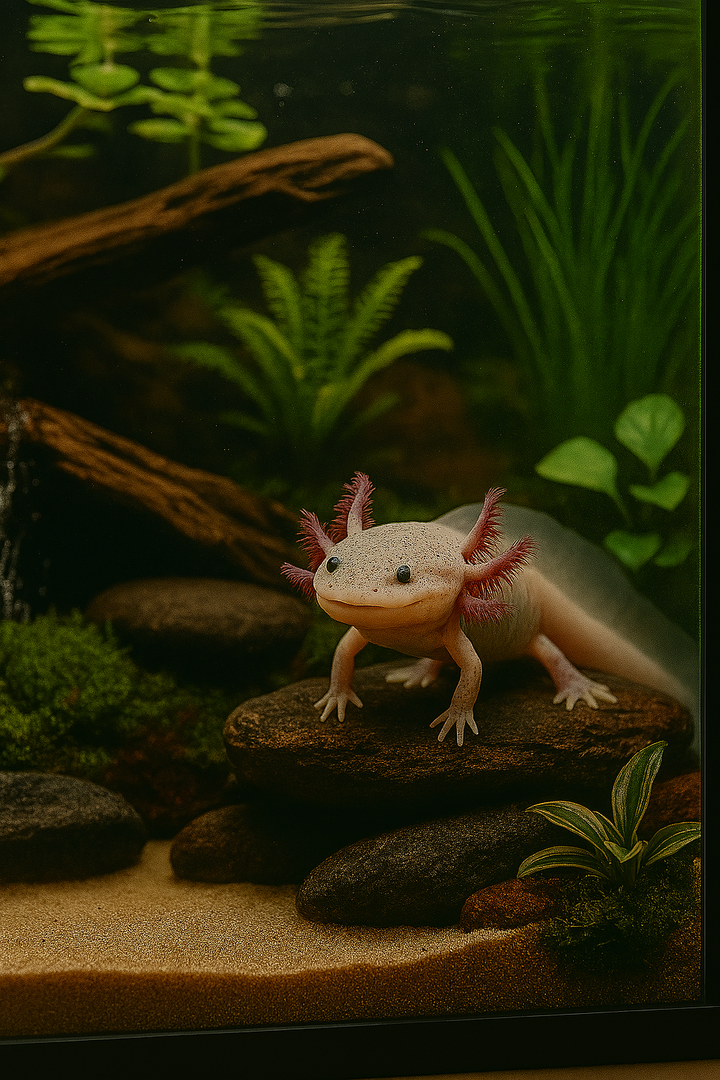
More axolotls die from water quality failure than from any other cause. Because they absorb water directly through their permeable skin, axolotls are affected by water chemistry faster and more severely than fish of comparable size.
Parameters to Maintain
- Ammonia: 0 ppm — any detectable ammonia burns gills and skin
- Nitrite: 0 ppm — any measurable nitrite indicates a filtration problem
- Nitrate: below 20 ppm — maintained through weekly water changes
- pH: 7.0 to 7.6
Water Changes
A 20-30% water change every week using dechlorinated water matched to tank temperature. Use a water conditioner that neutralizes chlorine and chloramine.
Temperature: The Problem That Kills
During summer months, a tank without active cooling will climb past 72°F — the threshold where heat stress begins in earnest. Above 75°F causes death within days. An aquarium chiller in the $150-200 range extends the axolotl's life by years.
Cycle the Tank First
Never add an axolotl to an uncycled tank. Cycle fully using the nitrogen cycle before introduction, or use a bottled bacterial supplement to accelerate the process.