What to Feed a Parakeet (Budgie): A Natural Diet Plan That Goes Beyond Seeds
The millet-and-seed diet most parakeet owners learned from the pet store is not wrong exactly — seeds are part of a parakeet's natural diet. But a seed-only diet is nutritionally incomplete, high in fat, and the primary reason most pet parakeets live eight to twelve years when the species can easily reach fifteen to twenty with proper care. Getting parakeet nutrition right is one of the most impactful things a budgie owner can do.
The Problem with Seed-Only Diets
Seeds are high in fat and carbohydrates but relatively low in the vitamins and minerals parakeets need for long-term health — particularly Vitamin A (deficiency is the most common nutritional problem in pet birds), calcium, and iodine. Birds on seed-only diets are essentially eating a diet equivalent to a human surviving on granola bars: not immediately fatal, but chronically depleted over years.
The second problem is that seed-only birds often become "seed addicts" — refusing to eat anything else — which makes transitioning them to a better diet difficult. Starting parakeets on varied diets while young prevents this.
The Foundation: High-Quality Pellets
Species-appropriate pellets formulated for small parakeets should make up 50-70% of a healthy budgie's diet. Look for pellets that list whole food ingredients first, avoid artificial colors (the brightly colored pellets are marketed to owners, not birds), and are sized appropriately for small beaks. Introduce pellets by mixing them gradually with the existing seed diet over several weeks, increasing the pellet proportion slowly as your bird accepts them.
Browse our bird food and supply collection for species-appropriate pellets, seed mixes, and nutrition-focused feeding options for parakeets and other small birds.
Seed Mix: The Right Role
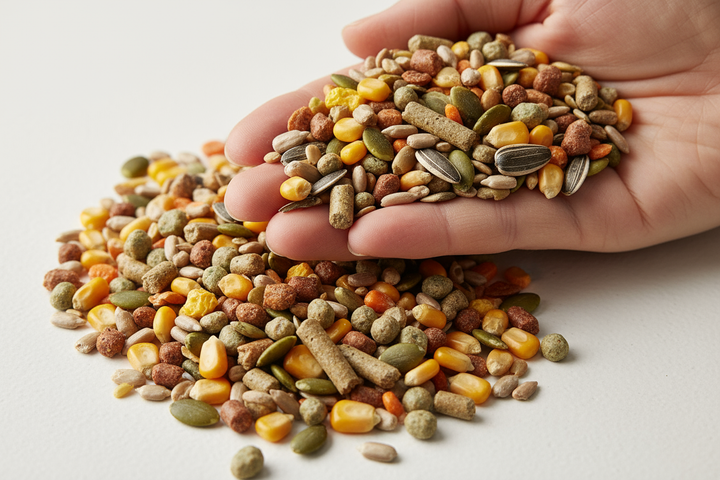
Seeds are not off the table — they play a real role as dietary variety, foraging enrichment, and high-value treats. The key is choosing a quality mix free of artificial additives, with a good variety of seed types (millet, canary seed, hemp, flaxseed) rather than just one or two. Offer seed as a supplement to pellets, not as the primary food source.
Fresh Foods: Vitamin A Is Critical
Dark leafy greens (kale, spinach, romaine, chard) and orange-yellow vegetables (carrots, sweet potato, bell pepper) are the most important fresh foods for parakeets because they deliver natural Vitamin A. Offer small amounts three to five times per week. Introduce new foods slowly — many parakeets are neophobic about unfamiliar foods and need repeated exposure before accepting them. Remove uneaten fresh food within a few hours to prevent bacterial growth.
Foods to avoid entirely: avocado, onion, garlic, chocolate, caffeine, alcohol, and anything with xylitol. Fruit is fine in small amounts but should not be a staple due to high sugar content.
Treats and Training Rewards
Millet spray is the gold standard training treat for parakeets — they work hard for it and the reward value is reliable. Offer small pieces rather than the whole spray to maintain treat value and prevent over-consumption. Natural bird treats from our bird treats and supplements section provide enrichment without the artificial additives found in most commercial bird treats.
A well-fed parakeet is an active, vocal, engaged companion. Nutrition is the foundation everything else builds on — get it right early and you will have a healthier, happier bird for significantly longer.