Why Guinea Pigs Should Never Live Alone (And How to Bond a Pair)

Guinea Pigs Are Herd Animals — This Isn't Optional
In the wild, guinea pigs live in groups. Social contact isn't something they simply enjoy — it's something they require. A guinea pig kept alone, no matter how attentive the owner, is almost certainly experiencing chronic stress. This isn't sentimentality. Solitary guinea pigs show elevated stress hormones and are more prone to illness, depression, and behavioral problems than those kept in pairs or small groups. Some European countries have made it illegal to sell a guinea pig without a companion. That gives you a sense of how the animal welfare community views this.
What Loneliness Actually Looks Like
A lonely guinea pig may become less active, stop exploring, lose interest in food, or vocalize more than usual. These are signs of an animal that is not coping well. Even if your pig seems outwardly fine, the absence of visible distress doesn't mean the absence of stress — guinea pigs are prey animals that mask discomfort. The effects of loneliness often surface as health problems before they show up as obvious behavioral changes.
How to Bond Two Guinea Pigs
Introducing a new pig to an existing one takes some care, but most guinea pigs bond successfully when the process is handled correctly:
- Use neutral territory — introductions should never happen inside the existing pig's cage. Use a playpen or a space neither pig has claimed. This removes territorial pressure immediately.
- Supervise closely — light chasing, mounting, and teeth chattering are normal dominance negotiations. These typically settle within the first hour of neutral-territory contact.
- Know the difference between negotiation and fighting — chasing and chattering are normal. Locked jaws, forceful biting, or blood means genuine fighting. Separate and slow the process down.
- Increase time gradually — start with 20 to 30 minutes and extend sessions as both pigs settle around each other.
Moving Into the Permanent Cage
When it's time to move a bonded pair into the shared enclosure, clean the whole cage first and rearrange the hides and water bottle placement. This reset ensures neither pig returns to a familiar claimed space, which reduces territorial friction significantly and gives both animals an equal footing in their new shared home.
Choosing the Right Pairing
Two females are generally the most harmonious starting point. Two males can coexist well but need more space and are more prone to disputes in cramped conditions. Male-female pairs will breed unless the male is neutered by a vet experienced with guinea pigs.
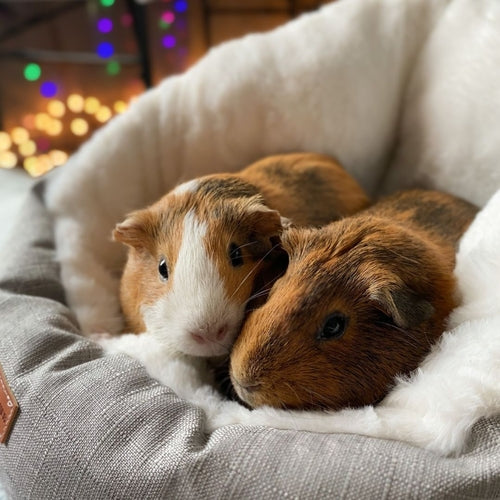
A well-bonded pair of guinea pigs is one of the most rewarding things to observe. They sleep together, eat side by side, and communicate constantly. Giving your guinea pig a companion is one of the most important welfare decisions you'll make as their owner.