Broiler Chickens vs. Laying Hens: What's the Difference and Which Is Right for You

If you're getting into backyard chickens, one of the first questions you'll face is a simple but important one: what do you actually want from your birds? The answer determines everything — the breed you buy, the feed you use, the setup you build, and how you manage your flock day to day. Let's break down the real differences between broiler chickens and laying hens so you can make the right call.
What Are Broiler Chickens?
Broilers are meat birds, bred specifically for fast, efficient growth. The most common type is the Cornish Cross — a cross between a Cornish and a White Plymouth Rock that reaches processing weight of around six to eight pounds in just six to eight weeks. Broilers are not long-term birds. They grow so fast that their legs and cardiovascular system struggle to keep up if you push them past twelve weeks. The trade-off is phenomenal feed conversion: they're among the most efficient converters of feed to meat of any livestock you can raise on a homestead.
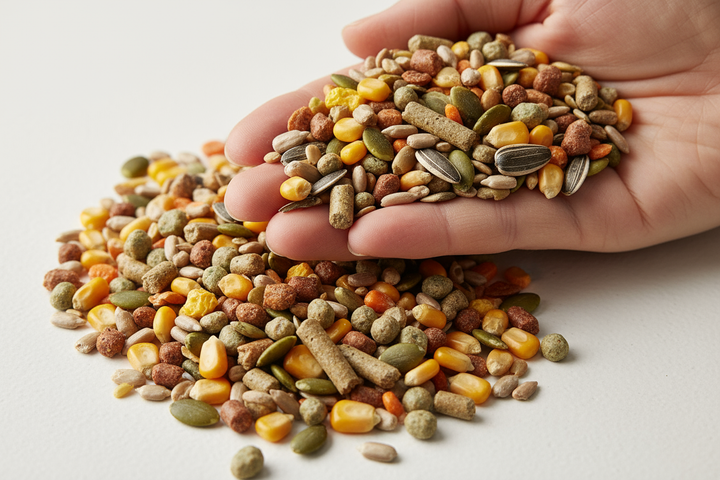
Broiler chicken feed is formulated for exactly this purpose — a high-protein starter at 22–24% for the first weeks, transitioning to a lower-protein grower and then a finisher ration before processing. Getting the feed right makes a significant difference in growth rate and final meat quality.
What Are Laying Hens?
Laying hens are bred for egg production. Breeds like the Leghorn, Rhode Island Red, Black Sex-Link, and ISA Brown can produce 250–320 eggs per year from a single bird. They're smaller than broilers, live for several productive years, and require a completely different management approach. Layer feed is formulated with lower protein (16–18%) and higher calcium to support eggshell production. Feeding the wrong ration leads to thin shells, reduced production, and long-term skeletal problems in your hens.
Can You Raise Both?
Absolutely — many backyard chicken keepers do. Just keep them separate. Broilers and layers have different feed requirements, growth rates, and space needs. Mixing them creates management headaches and usually means neither group is fed optimally. Two separate pens managed independently is the clean solution.
Dual-Purpose Breeds: A Middle Ground
If you don't want to manage two separate flocks, dual-purpose heritage breeds are worth serious consideration. Breeds like the Plymouth Rock, Dominique, Australorp, and Delaware aren't as productive as dedicated layers or as meaty as Cornish Cross broilers, but they're genuinely good at both. They tend to be hardier, more active foragers with better temperaments, and they reproduce naturally — something a Cornish Cross won't do. They're a great fit for homesteaders who want a low-input, self-sufficient flock.
Space and Setup
Broilers are low-energy birds that do fine in a relatively small space — a simple tractor-style pen that moves to fresh ground daily works perfectly and keeps birds healthy. Laying hens need more space and stimulation over their longer lives. Plan for at least four square feet per bird inside and ten square feet per bird in the run. Nest boxes, perches, and environmental enrichment all matter for layer welfare and productivity.
Which Is Right for You?
Want eggs on the breakfast table every morning? Start with laying hens. Want to grow your own meat on a budget? Raise a batch of broilers. Want the full homestead experience with minimal complexity? Try a dual-purpose heritage breed. There's no wrong answer — just the setup that fits your goals and your family's table.
Find feeds, supplies, and everything you need for your flock in our backyard chicken supplies collection, and explore more homestead essentials in our homestead supplies shop.