Goat Feed Guide: What to Feed Dairy and Meat Goats on the Homestead

Goats are browsers, not grazers — and understanding that distinction is the key to feeding them well. Unlike cattle and sheep, goats prefer to pick and choose: a bite of brush here, a mouthful of leaves there. A goat forced to subsist on grass alone will struggle. Feed them right, and you'll have productive, healthy animals that give well and stay sound for years.
The Foundation: Hay
Hay is the backbone of any goat's diet, especially for animals without access to year-round browse. For dairy goats, grass hay or a mixed grass-legume hay strikes the right balance of energy and protein without pushing too much calcium. Meat goats can do well on grass hay alone. High-quality alfalfa is excellent for does in late pregnancy and peak lactation — it's calorie and protein dense, exactly what a heavy milking doe needs — but too much alfalfa causes problems for bucks and wethers, potentially contributing to urinary stones.
Feed hay free-choice and invest in a proper hay rack or manger that keeps hay off the ground. Goats waste a surprising amount otherwise, and wet or soiled hay is quickly refused.
Grain and Concentrates
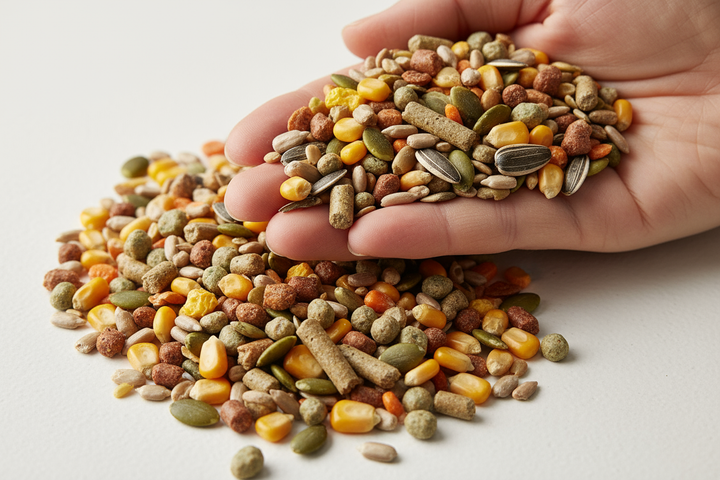
Not every goat needs grain. Mature wethers, non-pregnant dry does, and meat goats on good pasture often don't need supplemental grain at all. But dairy does in production, growing kids, and does in the last trimester of pregnancy benefit from a grain ration to meet higher energy and protein demands.
Use a goat-specific feed rather than generic livestock grain. Goat feed formulations are balanced for the unique mineral needs of the species — particularly the copper-to-iron ratio. Goats need significantly more copper than sheep, and a feed designed for both species is usually under-supplemented for goats.
Minerals and Salt
Free-choice loose minerals designed specifically for goats are non-negotiable. Loose minerals are far more bioavailable than block minerals, and most commercial blocks don't contain enough copper to keep goats in good condition. Offer a separate salt source as well. Some keepers supplement copper boluses every few months, particularly in regions with high iron in the water supply, which can bind copper and make it unavailable to the animal.
Water
Dairy goats at peak lactation can drink several gallons per day. Dirty water leads to reduced intake, which directly impacts milk production. Check and refresh water at least twice daily. In winter, a tank heater prevents freezing and keeps consumption up — goats dramatically reduce water intake when offered ice-cold water, and intake affects everything from milk production to digestive health.
What to Avoid
Avoid feeding goats anything high in sugar or starch in large amounts — this includes too much grain, too many treats, and bread or bakery waste. Grain overload can trigger bloat and acidosis, both potentially fatal. Also steer clear of yew, rhododendron, azalea, and other toxic plants. Goats are curious and will taste things that aren't good for them.
Find quality goat feed, minerals, and feeding equipment in our goat feed collection, and explore our complete homestead supply shop at Walnut Creek homestead supplies.